Showing posts with label graffiti. Show all posts

Thursday, 22 August 2013

Newtown's awesome graffiti

Newtown, just west of Joburg's Central Business District (CBD) is marketed as the city's 'arts and culture precinct'. It's crammed with museums such as Museum Africa, the Worker's Museum, the SciBono science museum and the SAB World of Beer. It also has some of the city's most famous music and theatre venues such as the Bassline, the Dance Factory and the Market Theatre, while the area's long history is outlined in a sign-posted heritage trail.

Mary Fitzgerald Square with big business looming large in the background
Follow these wooden heads to find your way around the Heritage Trail
The SciBono Museum which sits just across the road from the SAB World of Beer
Museum Africa
By the end of this year Newtown will also have a massive mall called the Newtown Junction. They are busy building it now close to the site of some 'old potato sheds' (sounds pretty basic, but the sheds are apparently pretty historic) right next to the motorway fly-over. By the time it is finished it will be the biggest mall in downtown Joburg and Newtown's escape from post-industrial decline will be complete.

The Turbine Hall. Once a power station it is now a popular venue for weddings and events
Newtown's streets and squares honour the many famous Joburgers who made their mark on this area, particularly musicians. There is a Miriam Makeba street (named after the popular 1950s jazz star), and Gerard Sekoto, Gwigwi Mrwebi and Margaret mcinigana (also famous jazz musicians/singers) streetsThe central square is named after Mary Fitzgerald, an activist and trade unionist who led protests against poor conditions in the mines in the early 1900s. Many of the pavements have plaques on them dedicated to famous South African jazz musicians and outside the Bassline Club is a statue of the late pop star Brenda Fassie, best known for her smash hit record Weekend Special. Once dubbed 'the Madonna of the townships' she sadly died of a drug overdose in 2004.

Brenda Fassie

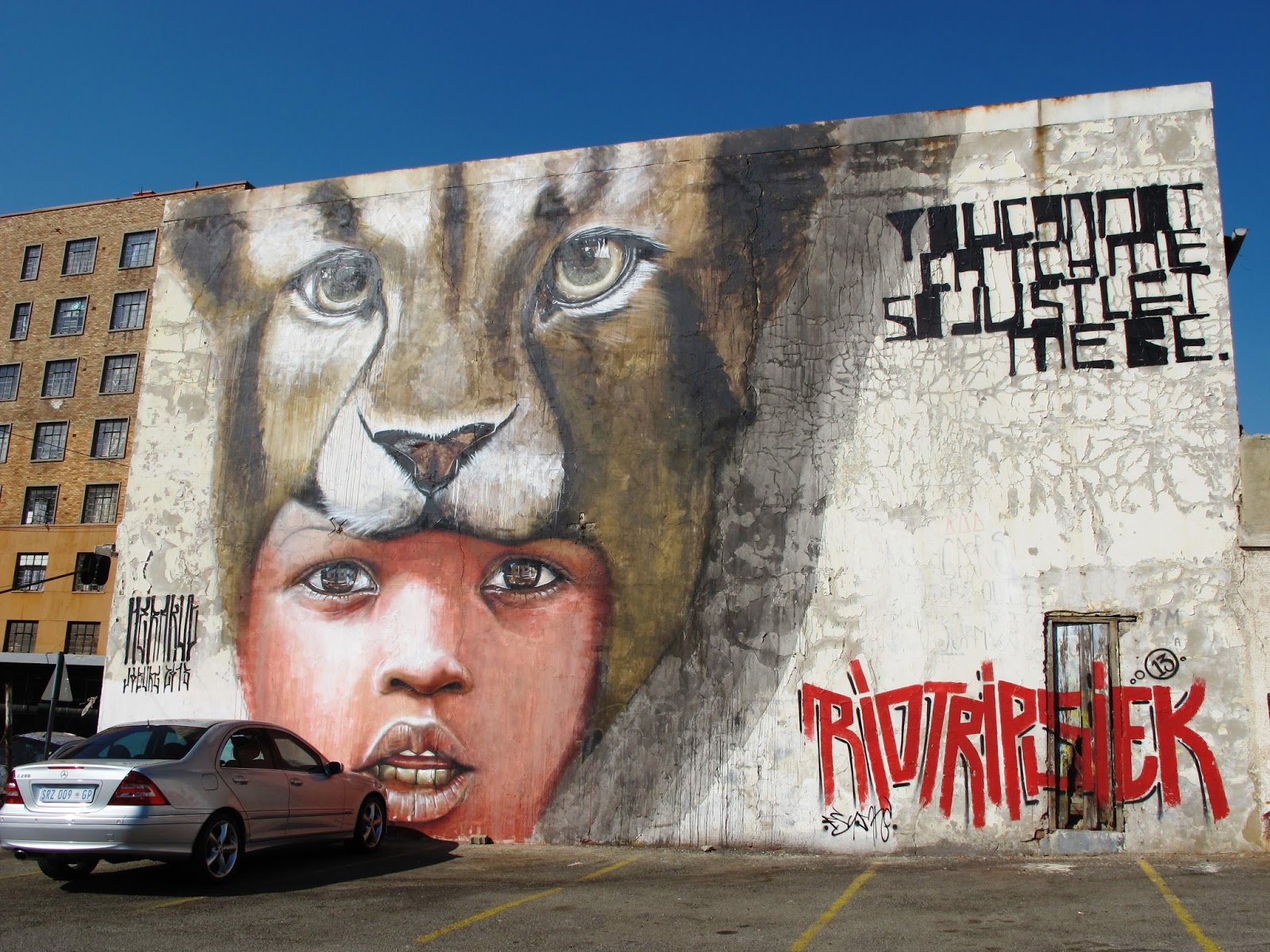
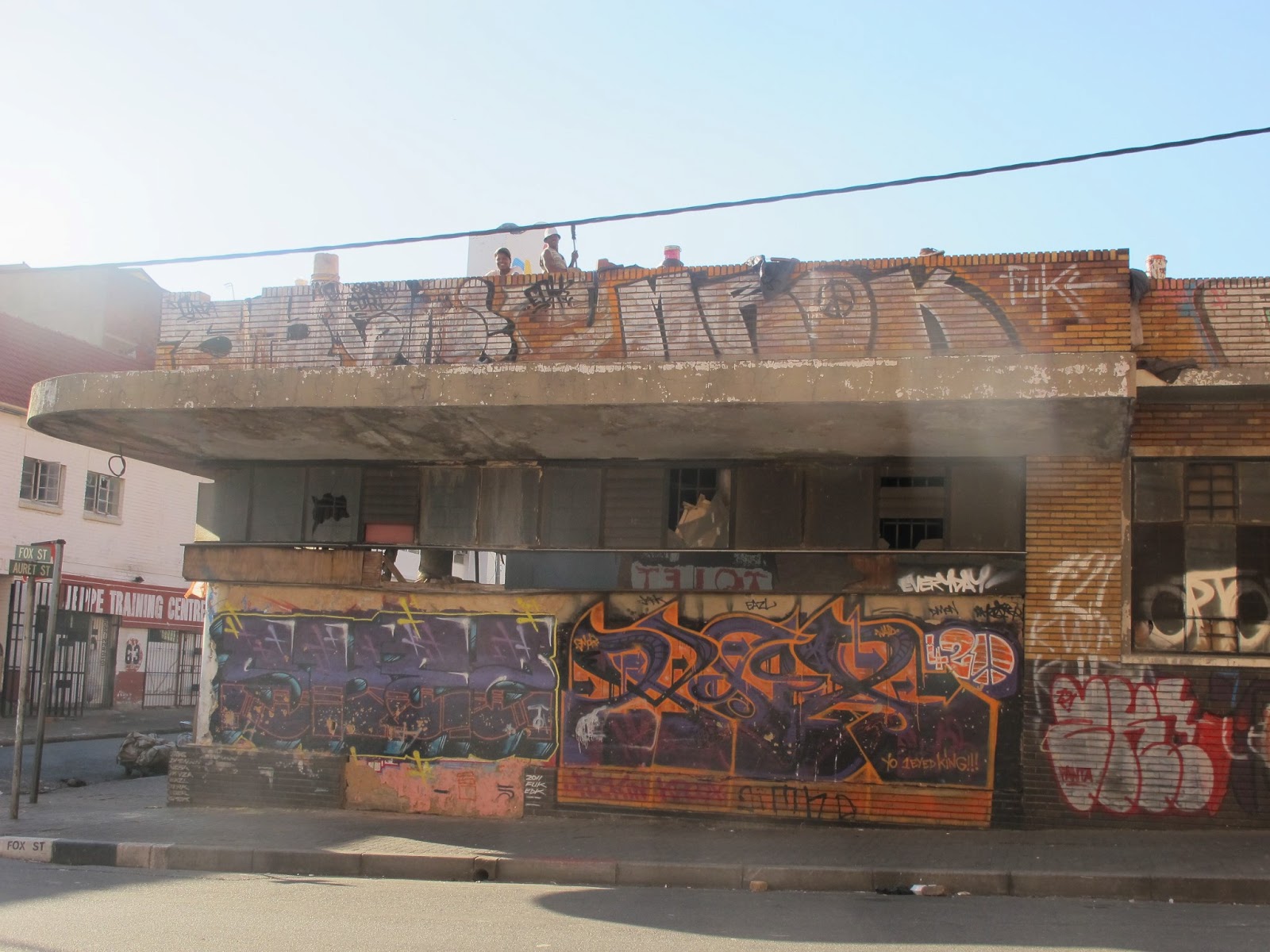
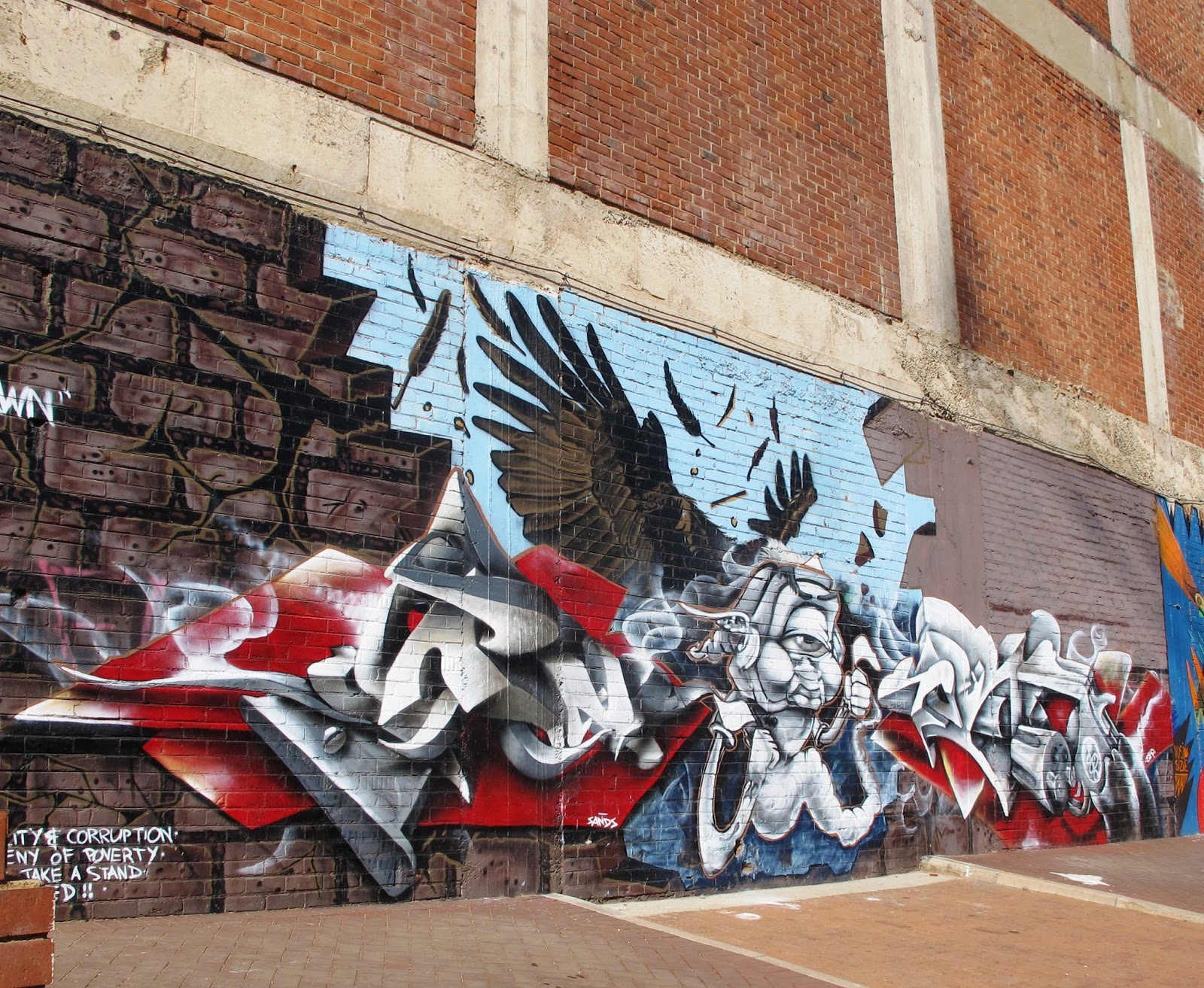
Taking a stroll through this more famous part of downtown Jozi, the thing which really strikes you the most though is the street art. The walls, gates, pillars and streets of Newtown are covered in bright murals and graffiti tags and around every corner there is something cool to look at. If you like graffiti, this is the place to come.




Tuesday, 7 May 2013

04.2013 - Graffiti - Maboneng and Troyeville

City of Gold Festival 2013

Johannesburg recently held a week long ‘graffiti festival’ called the City of Gold Festival. As an art form, graffiti seems the kind of thing which doesn’t really suit itself well to something formal like a festival. For that reason the largest part of the event took the form of film screenings and talks. As for the actual on-street graffiti side of things a few huge walls (this city is full of huge walls) were designated as massive canvases for local street artists and a few international visitors to make their mark.

The best way to find your way around these ‘exhibits’ of course is on foot and with a guide who knows where this stuff actually is. The fantastic girls at Past Experiences were organising a graffiti tour and for 120R and I was very excited to join my first Joburg walking tour.

Maboneng

Maboneng
The tour started at a tiny little street cafĂ© called Uncle Merv’s in a very attractive inner-city area of about 4 blocks called Maboneng. The Maboneng area is all owned by one guy who bought up a bunch of old warehouse buildings and then was determined to get the city’s cultural movers and shakers in and get gentrifying. If you think about it too much it’s a strange kind of place, but all-in-all it's still instantly attractive and a generally hip part of town. Packed with stylish, characterful cafes and bars, friendly faces and all very clean and very safe - it's a good idea well-executed. 

3 blocks from Uncle Merv's
The odd aspect (for me) is the contrast between the blocks around Maboneng and the area itself. There are no big walls or gates, but somehow the slightly rundown and gritty air of the rest of downtown is conspicuously absent. On the same street you’ve got some very fashionable warehouse flats and slick cafes and literally just around the corner it’s all derelict buildings and overflowing rubbish bins. Somehow there’s still no in-between ground. All extremely high contrast. I guess that’s a Johannesburg thing.

Uncle Merv's

This crazy eye is made from pebbles
Love monsters

 Troyeville

From Maboneng we began our walk straight up Commissioner Street into an area called Troyeville. Along the way we saw some murals which had been painted during a previous street art festival, controversially not by locals but by famous international street artists. Controversy aside, I still thought some of them were really interesting.


Troyeville is historically an area where new migrants to the city first set themselves up before finding their way into other parts of town and is one of the oldest districts in Johannesburg. Sadly over the years serious neglect has fallen upon the area’s historic houses. According to our guides, the locals actually really like what the city’s street artists are doing with their walls - it adds colour and life to the concrete jungle and brings art into their lives. The artists for their part of course love that Troyeville has embraced what they are doing and appreciates their art and many artists have actually decided to move into the area themselves. Win, win situation.


At one point, walking down one of the quiet pedestrianised backstreets of the area, we came across an awesome piece which had just been done by a group from Reunion Island as part of the festival. We bumped into 3 guys there who live in the building and they all agreed that it was pretty darn cool (see below).


Artists in action

Back over towards the Maboneng area and heading for the end of our tour we were lucky to find some of the City of Gold artists in action. Four artists, three of them South African and one from the UK, had been given a huge wall to do with as they wished. Their works didn’t really correspond with each other in any particular way, although according to the British guy he had been told that the local guys like to use bright colours so had thought through his own palette accordingly. Watching people paint is admittedly not hugely interesting, but seeing how they manage the scale of what they are working with was definitely impressive.


Now I have to admit that I was first more attracted to this tour because I thought it would help me with my street confidence to be shown around the areas around the CBD which I would be too afraid to venture into by myself as a newbie. I also thought, 'ah I'd prefer to be taking my camera out in company' (safety in numbers and all that). The graffiti and its purpose was something I hadn't really considered too much.

However, seeing the reaction of locals to the artists on their streets and witnessing how huge pieces of colourful graffiti in public spaces (rather than on the side of railway lines or on motorway flyovers) are actually embraced by the people who live there…well it put a new spin on things for me. What these guys are doing is not just marking their space and having fun. In this city of high walls and peeling paint, this form of street art is genuinely contributing to the better enjoyment of the inner-city for its residents.
 

Waiting by Faith 47 (bottom left corner)
HOW I GOT THERE: On the way there I took the Rea Vaya circle route (C3) bus from outside Park Station to the Carlton Centre and walked about 6/7 blocks (20mins walk) straight down Commisioner Street to the Maboneng area. Returning I was introduced to the easier mini-bus option (index finger up to head back into town). It runs along Main Street before crossing Rissik Street (from where you can walk to the Gautrain or get the Rea Vaya) and ends at the Bree Street minibus mega terminus.